A while ago I used a recipe from Sally Fallon's Nourishing Traditions to use some left over cabbage to make some Kimchee. Its wasn't difficult. Today we tasted it. It tasted great.
DP has been in Korea in the past and the taste seemed to be very similar, it just looked different he said. In Korea it seemed to look more red, which I think is because of the hot pepper sauce / paste they use there. I used dried chili's.
I loved the taste, didn't have any Kimchee before, so I don't know how its supposed to taste.
I am happy that I managed to make it, as this has motivated me to continue with my fermenting experiments to make sure our family gets nutritionally better food.
I have had some successes in the past with making a sourdough starter, this time it went wrong, so I will start over tomorrow.
My other success of this week was that I managed to revive my water kefir, I made orange ade with it and it tasted very good. I will try some other ways as well, with lime and lemon and whatever else I can think of. I sure have to dig into this stuff much more, as I do prefer having the healtier foods in life and the water kefir give a soda like drink, nice and fizzy.
Kombucha is also on my list to start again, so is milk kefir, yoghurt making and raw cheese making. And of course sauerkraut.
Saturday, 26 January 2008

Thursday, 24 January 2008
Gestational Diabetes???
In case its planned to have you subjected to a glucose tolerance test for gestational diabetes I urge you to read the below link, with article by Michel Odent in it first. This is very important information, as it seems that most midwives and doctors are very much mis informed on the topic.
It may make you wonder whether the medication will do more harm then good. I believe so.
http://rixarixa.blogspot.com/2008/01/michel-odent-on-gd.html
Link 2: http://www.gentlebirth.org/archives/gdmodent.html
I love Rixa's blog, as it is full of very good information about birth. Its, together with Laura Shanley's one of my favorites.
Have a good read and get informed before you get medicated.
Wednesday, 16 January 2008
vaccinations
There is a lot of stuff out there on vaccinations. Most of it either fully pro or fully. I noticed that it is really difficult to make a choice, one way or the other its not going to make parents feel like they have done it fully right.
Personally I think there is no need to vaccinate just like that. I definitely wouldn't vaccinate a 8 week old breastfed baby. I am of the opinion that breastfeeding will give a baby all it needs in immunity factors it needs.
I also think that for parents who have to make a choice, that it is better to make an informed choice. That means read the pro and con material and make up yr own mind, which is not easy.
There are a lot of factors in play as well. The immunity system of a child is not fully ready until about the age of 6, which means, at least to me, that it is better to wait with vaccinations until then, so the body can take full advantage of it, in case one wants to vaccinate.
I will put up some vaccination links that I find interesting in the side here as well, so that there is a nice list of good info.
I have personally really liked reading the book "Just a little Prick" by Hillary Butler, in that book there is a lot of sound information, which she has taken from studies from all over the world.
Thursday, 10 January 2008
Childbirth without Fear
I have started reading the above mentioned book. And from the foreword by Michel Odent I already see how all the interventions in hospitals and possibly also at home will give women and their babies a really bad birth and and bad start in life.
Oxytocine the love hormone hardly gets a chance in medicalized births, as often the process gets the label of "failure to progress" (can we please rephrase that into "failure to be patient"?). With the label FTP a women gets an IV with artificial oxytocine which is not the same and will not go to the brain. This will have an impact. I can think of various things, depression, having trouble bonding with the baby etc. Just let yr brain do the math.
Furthermore a woman who is not feeling safe will have a problem to progress anyway. It is clear from mammals that they do not give birth in a dangerous situation, they wait, and then when things are safe the young animal can be born. But only when the mother animal is safe.
Humans aren't any different. And from the stories that I have heard from mothers who had their babies in the hospital, most didn't feel calm, relaxed and safe, the crucial needs to be able to give birth. I can only guess how often that leads to interventions, based on the FTP, which will in its turn, when the progress still doesn't happen lead to a cesarean section.
I think its high time we start looking at the normal process of labour and birth and not standardize it anymore, as this is totally impossible with the amount of differences there are in humans. Some women give birth to their baby within 1 hour, others need 48 hours. Then there are women who deliver a full-term baby at 37 weeks, others need 44 for that.
With the knowledge I have about this I can do the simple math and know that the present practises surrounding childbirth are not in the best interest of mother and baby.
The mother needs to have the love hormone in her body and brain when the baby is born. When it is inhibited by a synthetic oxytocine right after birth to speed the placenta out, what will that do to the bonding process?
I have actually, in all the reading that I have done not found a reason to speed out the placenta just like that. When a woman is not bleeding, there is no reason to do that. Then nature can take its course and the mother can bond with her baby and nurse it.
Some women take longer getting the placenta out then others, so what, when mother feels well, why interfere? Maybe because dinner is served in 1 hour, or there is something on tv soon? Or shift ends? None of those are good reasons, and I know I am being a tad bit sarcastic here, but I have met too many women who felt that way. I have actually heard many stories from women who had comments from their docs that they would do an episiotomy coz shift was ending or that doc was going on holiday, or even things like that this would then maybe be the first baby of the new year, this makes me very sad.
The majority of women are very well able to give birth without any interventions and mother and baby will have a good bonding as well.
Bonding is crucial to build up a good relationship and nursing relationship with the baby, nothing should be allowed to interfere with that, unless health / lives are at stake.
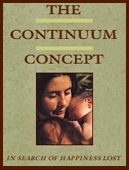
In TCC parenting bonding after birth is very important. Therefore I consider this topic fitting with TCC parenting.
Monday, 24 December 2007
Daycare can cause SIDS...
The following article is unfortunately in Dutch: http://www.nu.nl/news/1365696/151/rss/%27Kinderdagverblijf_kan_wiegendood_veroorzaken%27.html
It does, however, show that a Dutch scientist has found a link between daycare and SIDS.
He has a few reasons for his thought. Breastfeeding is usually not continued in a daycare setting, which is important for the health of mother and baby.
Very young children are focussed on getting to know their father and their mother, and when they all of a sudden cannot smell, hear, feel or see them, they get stressed, which can attribute to SIDS and is a negative factor in their health and development.
Guus de Jonge obviously is of the opinion that young children, below 1 year of age, should not be in daycare. Even before he published anything I already agreed with that. Its nice to know that there are really good scientific reasons behind it as well.
Sunday, 23 December 2007
Priorities
Lately I have been wondering again about something.
I noticed that people spends thousands of pounds for their wedding, but when it comes to having children, they do not want to spend a penny, but do complain about the care they have received.
It really made me wonder what is so important about a wedding compared to having a child.
I would prefer having a jeans wedding and in comparison to that be able to pick the best independent midwife I can find, that suits my thoughts and needs on birth.
But I guess people don't really think ahead or so. Which is another surprising thought to me. I prefer thinking ahead of what the future will bring and try to make sure that things go as smooth as possible for the whole family. Of course I cannot fully plan life either. Surprises do happen, but at least it makes it possible for me to anticipate on those without having to worry too much about other things.
I wish I could understand why people seem to spend so much money on a wedding and no money on having a baby. If anyone knows, please let me know in the comments. I am genuinely curious.
Thursday, 13 December 2007
What about toys
When I look at the toys that are available in shops, its all plastic or plastic related. There is very little natural. Of course you can buy wooden toys, but those are very very expensive.
So how do tribal kids play, what kind of toys do they have.
I have watched some films and read some about it in books.
Tribal kids have toys as well, just not in the way we do in our society. In our society all toys have to fit within the health and safety rules of the various countries, this means: often no metal, definitely no chance on hurting themselves. But how are they going to learn to use stuff for the future.
In tribal communities where hunting is important, kids have small bows and arrows and other hunting tools, kid size, but nonetheless real. They can hurt themselves.
They are simply working along with their parents in gathering and cooking etc.
Our children are often in daycare, with plastic toys, very little real life going on there, so very little learning experiences that are real life again.
I have found a small cooker on which kids can cook with tealights, they can burn themselves and hurt themselves, but they do enjoy using it.
Furthermore one of my girls has her own sewing machine, as she loves sewing, and with that learning about fabric and yarn and how to combine the 2, often with success, sometimes it doesn't turn out too well.
I have learned from what I saw in the films about tribes to not be bothered anymore about my kids wanting a bow and arrow and a catapult, those are real tools in tribal communities, of course not anymore for us, we don't go out hunting, but the ancient need to use these kind of things in play, hunting play, is there. They also check out what in the woods they can eat/ gather. They have asked about buying a book on that, as we have no clue on what exactly you can and cannot eat, we have lost those skills.
Earlier this year they went to Alice Holt for a surivival day and learned a lot about den building, gathering food from the woods and what plants have medicinal properties. At present they know more about that kind of stuff than I do.
Subscribe to:
Posts (Atom)